
Amish Furniture Types Made from Different Woods
Summary:
- Why Amish furniture? Solid wood, traditional craftsmanship, and heirloom quality that lasts generations.
- Wood choices: From rugged hickory to elegant cherry, each hardwood has unique beauty, durability, and cost.
- Best fits: Oak for dining tables, cherry or walnut for bedrooms, maple for polished durability, and hickory for rustic charm.
- Care matters: Simple upkeep—dust, polish, protect from moisture/sun—keeps your furniture beautiful for life.
- Covered Bridge Furniture: Visit in-store (Mankato, MN) or shop online to choose the right wood, stain, and style for your space.
Are you tired of couches that sag in the middle, bookshelves that bow, and end tables with peeling veneer? Are you longing for a stately headboard in your bedroom—something with a solid dignity and class?
In our current throwaway culture, spending top dollar doesn’t always guarantee top-quality results. That’s why Amish-made furniture, with its solid wood, traditional joinery methods, and expert craftsmanship, is considered the top choice for heirloom furniture.
But investing in heirloom furniture can feel intimidating, especially if you know nothing about quality wood. You’re choosing something for a lifetime, so it matters that you get the details right!
At Covered Bridge Furniture, we don’t just sell Amish-made furniture—we also have a deep knowledge of the craft. Today, we’ll walk you through the world of premium hardwood so you can make an informed choice for your furniture!
Table of Contents

Premium Hardwoods in Amish Furniture

Wood Types: Features & Benefits

Styles & Stains to Match Each Wood

Best Wood for Each Furniture Type

Wood Care & Maintenance Tips

Where to Buy Amish Furniture
Overview of Premium Hardwoods Used in Amish Furniture
Amish furniture is made from a variety of premium hardwoods, including:
- Quarter-Sawn White Oak
- Red Oak
- Maple
- Cherry
- Walnut
- Hickory
- Aspen
Each wood has unique characteristics, including different colors, textures, grain patterns, price points, and durability.
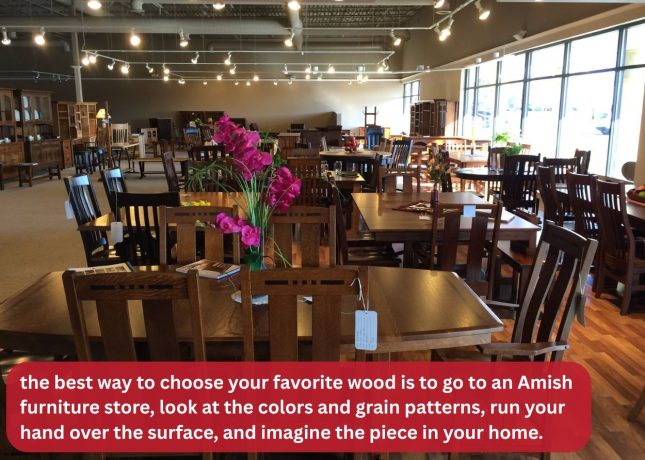
We’ll dive deeper into those characteristics in a moment. But remember—the best way to choose your favorite wood is to go to an Amish furniture store, look at the colors and grain patterns, run your hand over the surface, and imagine the piece in your home. A knowledgeable salesperson can tell you more about the wood types and customization options they offer.
Characteristics and Benefits of Each Wood Type
Now, let’s get into the basics of the different wood species:
White Oak
- Color: Light to medium brown with a hint of gray.
- Very strong and durable.
- Resistant to moisture.
- Cost: Mid-to-high range; more expensive than red oak but less than walnut.
Red Oak
- Color: Warm, reddish-brown tones with a prominent grain pattern.
- Hard and sturdy, but slightly less dense than white oak.
- Cost: On the lower end of hardwood pricing, making it a budget-friendly option.
Maple
- Color: Light cream, sometimes with a reddish or golden hue.
- Smooth grain, with a bright and fresh appearance.
- Very hard and resistant to dents.
- Cost: Moderate; generally more than oak but less than cherry or walnut.
Cherry
- Color: Rich reddish-brown that darkens beautifully with age.
- Ages gracefully, developing a warm patina with time.
- Moderately hard and strong.
- Cost: Higher priced due to its beauty and demand.
Walnut
- Color: Deep chocolate brown with rich grain variations.
- Unique grain makes each piece one-of-a-kind.
- Strong and stable, though not as hard as maple or oak.
- Cost: One of the most expensive hardwood options.
Aspen
- Color: Very light, almost white wood with minimal grain.
- Softer than the other hardwoods, but still durable for many uses.
- Cost: Low-cost option; one of the most affordable hardwoods.
Hickory
- Color: Light and dark streaks that make a bold color contrast.
- Distinctive, rugged beauty.
- Extremely hard and tough—one of the strongest North American hardwoods.
- Cost: Mid-to-high range; generally similar to or slightly above oak.
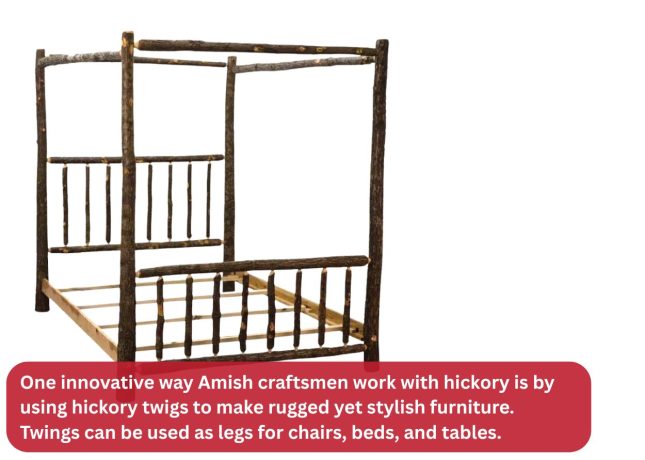
Note: Because hickory is so hard and tough, it’s a challenge for even the most expert woodworker. One innovative way Amish craftsmen work with hickory is by using hickory twigs to make rugged yet stylish furniture. Twings can be used as legs for chairs, beds, and tables. They can also be incorporated into headboards, chair backs, chair arms, etc.
Furniture Styles and Stains that Complement the Wood
When looking into your wood options, remember that the choice of wood stain and the style of furniture play a large part in the overall look of the piece.
Let’s talk about stain first. Wood can be stained a variety of colors, as you can see on our website. Many high-end custom furniture sellers, including Covered Bridge Furniture, will custom-mix a stain color for you if you have something specific in mind or something you want to color-match.
Just remember that different types of wood stain differently. For example:
- White oak is extremely versatile for staining
- Stained red oak will have a more prominent grain pattern than white oak
- Both red oak and cherry have natural reddish hues that influence the final color
- Walnut is usually left its natural color, since light stains have little effect on the darker wood, and dark stains can obscure the striking grain variations
The most common Amish furniture styles are Shaker, Mission, and Rustic. You’ll find that some wood species fit a specific style more than others.
- Shaker furniture, with its simplicity and clean lines, doesn’t have a lot of ornamentation, so the wood itself is the star. Maple and cherry are classic choices here.
- Mission furniture has flat panels, straight lines, a focus on sturdiness, and an emphasis on showing the grain of the wood. Oak—both red oak and quarter-sawn white oak—is the standout choice.
- Rustic furniture can be made from any type of wood, but hickory is especially popular, with its dramatic light-and-dark contrast and rough twigs making the piece look like it belongs in a log cabin.
Just remember that styles and stains may look a little different in person than online. If possible, visit a furniture store and view the various options in person.
You may also be interested in reading our blog post on Creating a Warm, Welcoming, and Timeless Living Space with Amish Furniture.
Choosing the Best Wood Species for Different Furniture Types
Now, let’s look at what wood works best for different types of furniture.
- White oak is often a top choice because of its strength and ability to handle daily use without showing damage. Its moisture resistance also makes it a practical option for a space where spills are inevitable.
- Red oak is another solid option, offering durability at a lower cost while bringing a warm, traditional look to the dining room.
- For those seeking elegance, cherry tables create a refined centerpiece that deepens in beauty over the years.
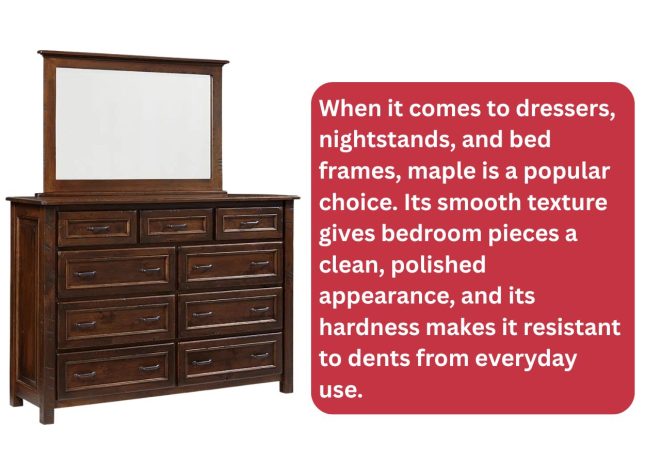
- When it comes to dressers, nightstands, and bed frames, maple is a popular choice. Its smooth texture gives bedroom pieces a clean, polished appearance, and its hardness makes it resistant to dents from everyday use.
- Cherry also shines in bedroom furniture because of the way its rich, reddish tones create a warm, inviting atmosphere.
- Walnut, with its luxurious dark color, is favored for high-end bedroom pieces, giving the room a timeless, sophisticated feel.
- For coffee tables, end tables, or entertainment centers, walnut’s deep brown hues lend a refined, classic touch that makes these focal pieces stand out without overwhelming the space. Oak is also popular for its low-maintenance properties.
- Hickory, on the other hand, is often chosen for rustic or farmhouse-style living rooms. Its dramatic streaks of light and dark grain create a bold, natural look that pairs well with cozy, informal spaces.
Of course, these are just some general guidelines. Stop by a woodworking shop or high-end furniture store to see what these wooden furniture pieces look and feel like in person!
Care and Maintenance Tips Based on the Type of Wood
Finally, let’s face it: when you’re choosing furniture that will be in your home the rest of your life, you have to think about how you’ll care for and maintain it. Let’s look at how to keep various wood species in good shape.
White Oak is naturally resistant to moisture, which makes it easier to care for than many other woods. To maintain its beauty, wipe up spills quickly and dust regularly with a soft cloth. Because oak can dry out over time, occasional polishing with a wood conditioner helps preserve its luster.
Red Oak is sturdy but a bit more porous than white oak, so it’s more susceptible to stains from liquids. Using coasters and tablecloths is essential to prevent water rings or discoloration. Regular dusting and occasional polishing will keep it looking fresh, and sealing the surface is a smart step for high-use pieces.
Maple is tough and durable, but its smooth surface can show scratches more easily than oak. To care for maple, use gentle cleaning solutions rather than harsh chemicals, and avoid excess water that might seep into seams. Applying a furniture wax or polish a few times a year helps protect against minor scratches and keeps the finish even.
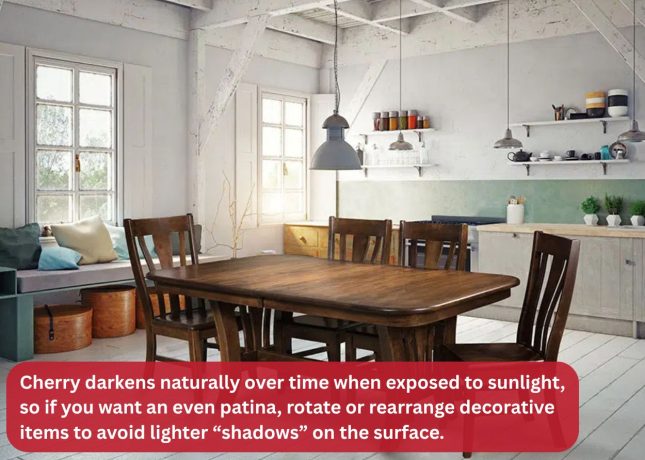
Cherry darkens naturally over time when exposed to sunlight, so if you want an even patina, rotate or rearrange decorative items to avoid lighter “shadows” on the surface. Cherry should be dusted often with a soft, dry cloth and cleaned occasionally with a mild wood cleaner. Because it’s somewhat softer than oak or maple, take care to avoid placing hot or wet items directly on its surface.
Walnut is a prized wood for its deep tones, but it benefits from a gentle touch. Dust regularly and clean with a damp (not wet) cloth, followed by drying with a soft towel. Walnut tends to fade if exposed to direct sunlight for long periods, so positioning furniture away from bright windows or using UV-protective finishes will help. A good wood conditioner every few months will bring out its natural richness.
Hickory is extremely strong and durable, which makes it lower-maintenance than softer woods. Its bold grain can sometimes collect dust, so regular wiping is helpful. Use a mild cleaner to remove sticky spots, and polish occasionally to enhance its rugged character. Because it’s so dense, hickory resists dents and scratches better than many other woods.
Aspen is a softer hardwood, so it requires a little more care. Avoid placing heavy or sharp objects on it, as dents and scratches are more likely. Use coasters and mats under hot or wet items, and clean gently with a damp cloth. Many people choose a protective finish for aspen furniture to help it withstand daily use, especially in households with kids.
Where to Buy High-Quality Amish Furniture
If you’re looking for a one-of-a-kind piece of heirloom furniture that will last for generations, Amish furniture is the way to go.
Here at Covered Bridge Furniture, we always recommend going in person to an Amish furniture store so you can talk to an experienced salesperson about your options, see the quality of the craftsmanship for yourself, and envision the piece in your home.
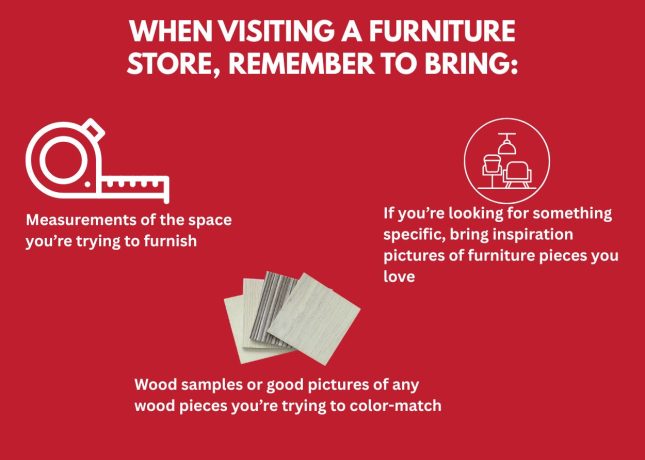
When visiting a furniture store, remember to bring:
- Measurements of the space you’re trying to furnish
- Wood samples or good pictures of any wood pieces you’re trying to color-match
- If you’re looking for something specific, bring inspiration pictures of furniture pieces you love
Our furniture store is in Mankato, MN, and we’d love to have you stop in! Even if you’re just driving through, you can custom-order your piece and we’ll ship it to you.
Although we recommend coming in person, we understand that you may live far from Amish country. That’s why we also offer Amish Furniture online. To get started on the process, reach out to us and let us know what you’re looking for!
We look forward to having a meaningful conversation about the right furniture for your space.