The Difference Between Amish Outdoor Furniture and Big Box Store Patio Furniture
TL;DR—The Difference Between Amish Outdoor Furniture and Big-Box Store Patio Furniture
- Minnesota’s freeze-thaw cycles put real pressure on outdoor furniture materials that absorb moisture, like untreated or lightly sealed wood.
- HDPE, the material used in Amish-made poly furniture, doesn’t absorb water, so freeze-thaw cycles do very little damage.
- Furniture made from HDPE can last for decades with essentially no maintenance, no staining, sealing, or repainting required.
- Amish-made furniture offers custom color, size, and style options built around your actual space, not just what’s in stock.
- Our poly outdoor furniture comes with a twenty-year residential warranty and a team that knows the product firsthand.
- Big-box furniture can still be a good fit for short-term or lower-commitment needs. The right choice depends on your budget and lifestyle.
Minnesota winters are hard on almost everything left outside, and outdoor furniture is no exception. When moisture gets into a material and then freezes, it expands by about 9 percent, and that pressure is what causes cracks, splits, and warping over time. It’s simple physics. The same process that cracks rock is at work here, just on a smaller scale. That’s why the materials that make up a piece of furniture matter more in a climate like ours than they might in a milder one.
This is an important difference between Amish outdoor furniture and big-box store patio furniture, and it really affects how much winter maintenance you’ll end up doing: covering furniture, hauling it into storage, and resealing it every spring.
Covered Bridge Furniture has spent years selling Amish-crafted poly outdoor furniture out of our showroom in Mankato, in a climate that tests outdoor furniture every winter. So let’s walk through what actually holds up here, and what that means for how much work your furniture will ask of you.
Table of Contents

Freeze-Thaw Damage

Maintenance Differences

Custom Options

Warranty Benefits

Which Is Best?

Picture Your Patio
What Freeze-Thaw Does to Outdoor Furniture
So what does freeze-thaw actually do to a piece of furniture sitting outside all winter? The problem starts with water absorption. Materials that soak up moisture, like untreated or lightly sealed wood, take on water every time it rains or snow melts. When temperatures drop, that trapped water freezes and expands, putting pressure on the material from the inside. Over enough cycles, this is what causes cracking and splitting.
This isn’t a small or occasional problem here. Research from the University of Minnesota Extension has tracked daily freeze-thaw cycles across the state, finding the Twin Cities area has seen an increase in such cycles during December, January, February, and March over the past three decades. Add in the fact that Minneapolis-area temperatures typically swing from 9°F to 83°F over the course of a year, and it’s clear why some outdoor furniture holds up here, and some doesn’t.
HDPE (high-density polyethylene), the material used in Amish-made poly outdoor furniture, works differently. It’s a dense plastic made from recycled milk jugs and other post-consumer plastic, and it doesn’t absorb water in any meaningful way, so freeze-thaw cycles can’t do any significant damage to it. That’s a structural property of the material itself, not a claim specific to any one brand.
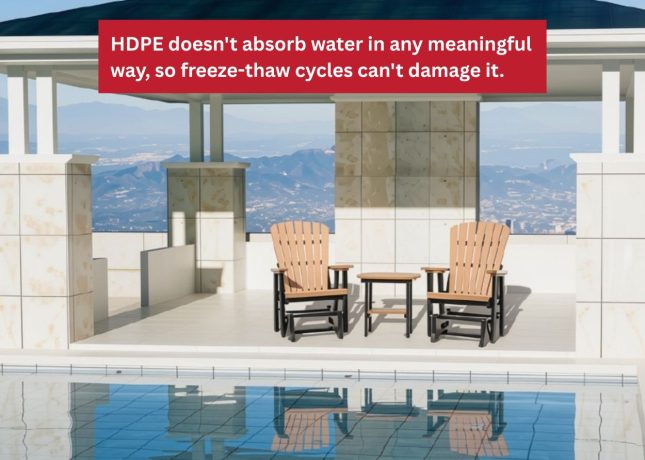
Pieces like our Adirondack chairs and gliders are built from recycled HDPE and assembled by hand with marine-grade stainless steel hardware, piece by piece, rather than on an assembly line focused on speed and volume.
The Maintenance Trade-Off
This is where the freeze-thaw problem turns into a real, ongoing chore for some outdoor furniture owners. Depending on the material, “getting your patio ready” every spring can include:
- Sanding and resealing wood
- Touching up chipped paint or finish
- Checking joints for cracks after winter
- Hauling pieces in and out of a garage or shed each season
Furniture made from recycled HDPE skips most of this. It doesn’t need staining, sealing, or repainting, and it can stay outside through the winter without covers or storage. Instead, all that’s needed is a quick wipe-down to clean the dust and dirt off the surface of the furniture. Furniture made from HDPE can last for decades with essentially no maintenance. That kind of lifespan changes the math on cost. A lower upfront price does not always mean lower cost over time once you factor in replacement and upkeep.
This is not to say every big-box furniture option struggles here. Materials like powder-coated aluminum or well-sealed hardwood can also perform well in cold climates, but they typically require more seasonal attention to achieve this. The question to ask before buying anything is simple: how much yearly maintenance does this material require of me?
Customization That Fits Your Space
So how do you get furniture that fits your space instead of just filling it? If we look beyond the material itself, we see that off-the-shelf furniture typically comes in a set number of colors, sizes, and configurations chosen to fit a wide range of homes. For some people, this is all they need.
However, Amish-made furniture works a bit differently. Instead of choosing from what’s in stock, you work with our team to select the color combination, size, and style that best fit your actual space. Whether it’s a swivel glider for a small balcony or an outdoor extension table with leaves for a full deck, we have options for you.
Warranties and the Buying Experience
What happens after the sale matters just as much as the furniture itself. Big box furniture warranties vary widely. Some are solid, others are limited or prorated, and if something goes wrong, you’re often routed through a call center or asked to ship the piece back to a warehouse.
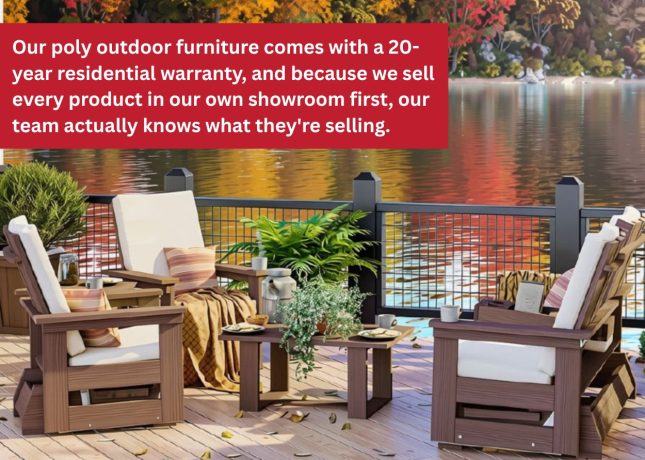
Our poly outdoor furniture comes with a 20-year residential warranty. Because we sell every product first in our own showroom before it ever goes online, our team actually knows the furniture we’re selling. You can find more details on our outdoor furniture FAQ page. When you call or stop in, you’re talking with someone who can answer your questions honestly, without a sales script.
Choosing What's Right for You
Both categories have their place, so choose the one that best fits your needs and lifestyle. If you’re renting for a year or two, need something for a single event, or already own furniture that holds up well through winters, a big-box option (or keeping what you already own) may be all you need.
But if you find yourself in the place of needing to decide how to make your outside space more user-friendly, a few honest questions can help:
- How many winters do you expect this furniture to sit outside?
- How much yearly upkeep are you willing to do?
- Does it need to survive a Minnesota winter uncovered, or will you store it?
If your answers point toward “for years to come” and “as little maintenance as possible,” furniture made from recycled HDPE is a great long-lasting option.
Picture Your Patio, Years From Now
Imagine sitting outside next summer, and the summer after that, on furniture that still looks the way it did the day it arrived. No re-staining on weekends and no hauling furniture into the garage before the first snowfall. Just a deck or patio that’s ready to be enjoyed whenever you catch a few moments to relax.
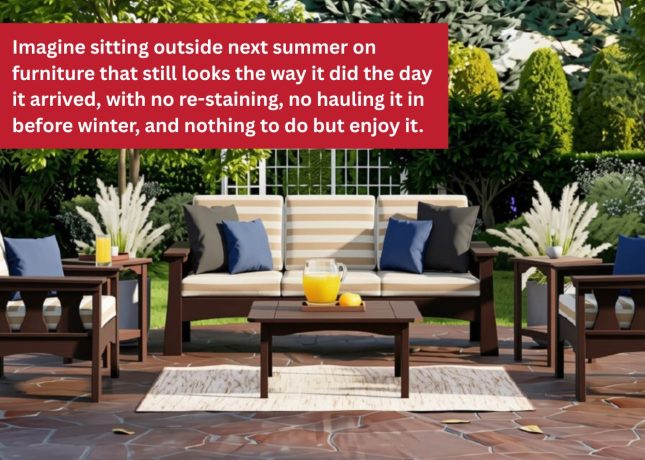
Our job at Covered Bridge is to build furniture that holds up through whatever Minnesota winters bring, so you spend your time enjoying it instead of maintaining it.
If you’d like to see the difference for yourself, stop by our Mankato showroom or browse our outdoor furniture collection online. We’re happy to answer any questions and help you find the right fit for your space.
Looking to bring the same craftsmanship indoors? Check out these related posts:
From Cluttered to Classic: Creating a Home Office With Amish Built Furniture